

Unger MicroWipe Green Cloth
Price range: £2.98 through £7.38 exc. VAT
The Unger MicroWipe Green is a professional-grade dual-sided microfibre cloth rated for up to 500 machine washes. At 350 g/m² with 70% polyester and 30% polyamide construction, it absorbs up to six times its own weight in water — making it one of the most reliable window cleaning cloths available in the UK. Use the coarse side to lift dirt and grease, then flip to the smooth side for a lint-free, streak-free polish. Available in two sizes: MF40L (40 × 40 cm) and MF60L (80 × 60 cm).
Unger MF40L
Unger MF60L
streak-free glass cloth
lint-free microfibre
dual-sided cleaning cloth
500 wash microfibre
window cleaner cloth UK
professional window cleaning supplies
350gsm microfibre cloth
- Dual-sided texture — coarse face for scrubbing, smooth face for polishing to a streak-free finish
- High absorption — holds up to 6× its own weight in water
- Lint-free — leaves no fibres or smears on glass or mirrors
- 500 wash lifespan — overlock stitched edges hold shape after repeated hot washes
- Chemical-free capable — effective with water alone; no cleaning product required
- Two sizes — MF40L (40 × 40 cm) for detail work, MF60L (80 × 60 cm) for large panes
- Machine washable at 60°C — do not use fabric softener
Unger MicroWipe Green — Professional Microfibre Window Cleaning Cloth (MF40L / MF60L)
The Unger MicroWipe Green is the industry-standard microfibre cloth used daily by professional window cleaners across the UK. Its dual-sided construction — a coarse scrubbing face and a smooth polishing face — handles the full cleaning sequence without swapping tools. Because it absorbs up to six times its own weight in water, it manages wet rubber seals and soaked frames efficiently after squeegee work.
Available as the MF40L (40 × 40 cm) for detail work and pockets, or the larger MF60L (80 × 60 cm) for wide commercial panes, both sizes share the same 350 g/m² fabric and 500-wash durability rating. This cloth works equally well for domestic glass, mirrors, uPVC frames, and smooth interior surfaces — with or without cleaning chemicals.
|
500
Machine wash cycles
|
6×
Water absorption vs own weight
|
350
g/m² fabric weight
|
2
Sizes: 40×40 cm & 80×60 cm
|
Why UK Professionals Trust Unger MicroWipe
Unger has supplied professional window cleaning equipment in the UK for decades. The MicroWipe Green is their workhorse cloth — not a premium upsell, but the cloth that earned the brand's reputation on daily commercial rounds. Its 350 g/m² weight is calibrated to balance absorption and wringing ease, which matters on a cold British morning when you are managing wet frames and running squeegees at pace.
This cloth replaced scrim for many window cleaning companies in the UK. Unlike scrim, it resists linting after hot washes and holds its square shape thanks to overlock stitching — meaning it performs consistently on the 400th wash as on the first.
This cloth suits anyone who cleans glass regularly, including:
|
|
||||
|
|
||||
|
|
Product Specifications
| Specification | MF40L (Small) | MF60L (Large) |
|---|---|---|
| Dimensions (Metric) | 40 × 40 cm | 80 × 60 cm |
| Dimensions (Imperial) | 16″ × 16″ | 32″ × 24″ |
| Material | 70% Polyester / 30% Polyamide | |
| Fabric Weight | 350 g/m² | |
| Water Absorption | Up to 6× its own weight | |
| Texture | Dual-sided — coarse scrub face & smooth polishing face | |
| Edge Finish | Overlock stitched — maintains shape after repeated hot washes | |
| Maximum Wash Cycles | Up to 500 washes | |
| Wash Temperature | Machine wash at 60°C — no fabric softener | |
| Colour | Green | |
Unger MicroWipe Series Comparison
If you are deciding between the three Unger microfibre cloth lines, the table below sets out exactly where the Green Series sits relative to the Lite (Blue) and Ninja (premium) variants.
| Feature | Blue Series — Lite MF40E / MF60E |
Green Series — Classic ✓ MF40L / MF60L |
Ninja Series — Premium MN40H / MN55H / MN60H |
|---|---|---|---|
| Fabric Weight | 300 g/m² | 350 g/m² | 400 g/m² |
| Wash Cycles | ~200 | ~500 | ~500 |
| Texture | Soft, low friction | Dual-sided (coarse / smooth) | Dual-sided + abrasive scrub corners |
| Corner Pockets (pole use) | No | No | Yes — 4 pole-tip pockets |
| Abrasive Scrub Zones | No | No | Yes — 4 corners |
| Best For | Light polishing, mirrors, dusting | Standard window cleaning, bulk drying, daily rounds | Heavy debris, stuck-on soiling, high-reach pole work |
Unger MicroWipe Green vs SmartColor MicroWipe — What Is the Difference?
Both ranges are rated by Unger for glass, mirrors, and window frames — this is not a case of one being suitable for windows and the other not. Many window cleaning professionals use SmartColor cloths on their rounds successfully. The material blend for the SmartColor 2000 and 4000 — 80% polyester and 20% polyamide — is the standard high-performance split for cutting through oily handprints, grease, and suction cup marks on glass without chemicals. Both series also absorb up to six times their own weight in water.
The real difference is in weave construction and how that affects the finish on glass. The MicroWipe Green uses a flat split-microfibre dual-sided weave: one side scrubs, the other polishes to a bone-dry, lint-free finish. The SmartColor series uses a terry loop weave engineered to trap bacteria and deep facility grime. That loop structure is excellent for surface hygiene work, but the loops can catch on rough window seals or rubber gaskets and occasionally shed tiny lint fragments. Furthermore, if the SmartColor cloth is too wet on glass, the terry loops leave small droplets that dry into hard-water spots.
The SmartColor 200 (ME40) is actually a popular choice among window cleaners for quick indoor mirror and glass touch-ups. Its lighter 250 g/m² fabric creates less friction against the glass surface, making it faster to use dry on large mirror runs than a heavier cloth.
| Feature | MicroWipe Green MF40L / MF60L |
SmartColor 200 ME40* (Lite) |
SmartColor 2000 MB40* (Medium) |
SmartColor 4000 MF40* (Heavy) |
|---|---|---|---|---|
| Suitable for Glass & Windows? | Yes | Yes — popular for indoor mirrors & touch-ups | Yes — use damp, not soaking | Yes — best on frames & sills; use damp on glass |
| Material Blend | 70% Polyester / 30% Polyamide | 80% Polyester / 20% Polyamide — optimised for grease and oil on glass without chemicals | ||
| Fabric Weight | 350 g/m² | 250 g/m² | 350 g/m² | 450 g/m² |
| Wash Cycles | ~500 | ~200 | ~1,000 | ~1,500 |
| Weave Type | Flat split-microfibre — dual-sided (coarse scrub / smooth polish) | Terry loop weave — designed to trap bacteria and deep grime; low surface friction on the 200 | ||
| Glass Finish Risk | None — polishing face leaves bone-dry finish | Minimal — low friction, good dry glide | Water spots if cloth is too wet | Water spots if too wet; minor lint risk on rough seals |
| Colour Coding | Green only | Red, Blue, Yellow, Green — zone hygiene separation (R / B / Y / 0 suffix in product code) | ||
| Best Window Use | Full glass cleaning sequence — scrub and polish in one cloth | Fast dry polish on indoor mirrors and lightly soiled glass | Bulk water removal on sills and frames; damp glass wipe | Heavy uPVC frame scrubbing; sills; equipment wipe-down |
Getting the best from SmartColor on a window round
If you use SmartColor cloths alongside or instead of the dedicated window series, two rules make the difference. First, always use them damp rather than soaking — a saturated terry cloth leaves small droplets on the glass that dry into hard-water spots. Second, finish with a dry section of the cloth (or a dry Blue Lite MF40E) to bring the pane to a fully dry finish. The SmartColor 200 is the easiest to use on glass because its lightweight 250 g/m² fabric creates very little drag and glides quickly across a dry mirror or partition.
A common setup on commercial rounds: use the SmartColor 4000 on uPVC frames and sills — its 1,500-wash rating means heavy frame grime will not wear it out — then use the MicroWipe Green (MF40L) for the glass itself where the flat dual-sided weave gives a consistently cleaner finish with no risk of lint on rubber gaskets.
The most common mistake is reaching for a damp Green cloth to polish dry glass. The residual moisture causes smearing that requires a second pass. Instead, keep your Green (MF40L) in a separate pouch for wet work — squeegee mopping and frame wiping — and use a dry Blue Lite cloth (MF40E) for the final glass inspection pass. The Green's 350 g/m² weight is overkill for dry polishing anyway; save it where that absorbency matters.
Also: never wash the Green and Blue cloths in the same load. The Ninja's abrasive corners (if you own both) will pill the lighter Blue cloth's fibres during the spin cycle, causing lint issues on your next indoor glass job.
How to Use the Unger MicroWipe Green
|
1
|
Dampen the cloth Wet the cloth with clean water and wring it until it is damp but not dripping — a soaking cloth transfers too much water to the glass surface. |
|
2
|
Scrub with the coarse side Use the rougher face to remove fingerprints, greasy marks, traffic film, and dirt from the glass or surface — work in a Z or straight horizontal pattern to cover the full pane. |
|
3
|
Squeegee or wipe off If using with a squeegee, apply the cloth pre-wash to the glass before your squeegee pass. Alternatively, wipe the surface clean directly with the damp coarse side before flipping. |
|
4
|
Polish with the smooth side Flip to the smooth face — use it dry to buff away any residual moisture or light smearing and bring the glass to a streak-free, lint-free finish. |
|
5
|
Mop squeegee channels (optional) After a squeegee pass, run the MF60L along the bottom rubber channel and side frames to catch drips — its 6× absorption rating means it collects a large volume of water without dripping onto the sill. |
|
6
|
Launder after use Machine wash at 60°C without fabric softener. Air dry where possible — tumble drying at low heat is acceptable, but high heat degrades the microfibre over time. |
Using Without Chemicals
The MicroWipe Green is fully effective with water alone for most window cleaning tasks. The ultra-fine microfibre filaments mechanically lift grease and dust without needing a surfactant. Where glass is heavily contaminated — traffic film on ground-floor commercial glazing, for instance — a small amount of diluted glass cleaner on the coarse face will assist. Rinse the cloth thoroughly before laundering if chemical has been used.
Care, Storage & Safety
- Machine wash at 60°C — this temperature is effective for hygiene without damaging the fibres
- No fabric softener — softener coats the fibres and dramatically reduces absorbency
- Use a small amount of detergent only — excess detergent residue causes smearing on the next glass job
- Air dry where possible; low-heat tumble drying is acceptable
- Store dry cloths in a sealed pouch or bag to prevent contamination with dust or cleaning chemicals
- Wash the Green Series separately from Ninja cloths — the abrasive corner zones can pill lighter microfibre during the spin cycle
- Do not use with bleach or harsh solvents — these degrade the polyamide content and shorten the cloth's lifespan
- Inspect edges periodically — if overlock stitching begins to unravel, the cloth has reached end of life
Frequently Asked Questions
What is the difference between the Unger MF40L and MF60L microfibre cloths?
Size only — the MF40L measures 40 × 40 cm and fits tool belts and pouches easily, making it the standard choice for professional window cleaning rounds. The MF60L measures 80 × 60 cm and is better suited to large commercial glazing, conservatories, or any job where you want to cover more glass with fewer strokes. Both share the same 350 g/m² dual-sided microfibre construction and 500-wash rating.
How does the Unger MicroWipe Green compare to traditional scrim window cleaning cloths?
Scrim is a woven linen cloth that has been used in window cleaning for decades. It delivers an excellent streak-free finish but lints heavily in the early washes and deteriorates quickly. The Unger MicroWipe Green is lint-free from the first use, lasts up to 500 machine washes, and dries faster. Many professional window cleaners in the UK have replaced scrim entirely with the MicroWipe Green for everyday glass work, retaining scrim only for specialist applications.
Can I use the Unger MicroWipe Green without cleaning chemicals?
Yes. The ultra-fine microfibre filaments lift grease and dust mechanically, so plain water is sufficient for most routine window cleaning. This makes the cloth particularly useful for interior glass and mirrors where chemical residue is undesirable. For heavily soiled external glass — traffic film, bird fouling, or construction dust — a small amount of diluted glass cleaner on the coarse face will help, but it is not required for standard maintenance cleaning.
How many times can I machine wash the Unger MicroWipe Green before it needs replacing?
Unger rates the MicroWipe Green for up to 500 machine washes at 60°C. In practice, performance degrades sooner if fabric softener is used — softener coats the fibres and reduces absorbency significantly, often within 20–30 washes. Washing without softener and air drying rather than tumble drying will help the cloth reach its rated lifespan. When the overlock stitching begins to unravel or the cloth leaves streaks it previously would not, it is time to replace it.
What is the difference between the Unger MicroWipe Green and the Unger Ninja MicroWipe?
Both share a dual-sided design, but the Ninja (MN series) is heavier at 400 g/m² and adds four corner pockets that slip over a pole tip for high-reach window cleaning, plus abrasive scrub zones on each corner for removing stubborn debris without changing tools. The Green Series (MF40L / MF60L) is lighter, more flexible, and better suited to ground-level and interior work where pocket attachments are not needed. If you work at height with a water-fed pole or extension pole regularly, the Ninja series is worth the additional cost. For standard residential and commercial rounds, the Green Series is the more practical everyday cloth.
Is the Unger MicroWipe Green suitable for cleaning uPVC window frames as well as glass?
Yes — the coarse side works well on uPVC frames, sills, and window surrounds. However, if you are cleaning frames with significant grime or algae build-up, using a dedicated cloth for frames and a separate cloth for the glass itself prevents transferring debris back onto the glazing. Many professionals keep one cloth specifically for frames and a second for the glass, rotating and laundering each separately.
Can the Unger MicroWipe MF40L be used on car windscreens and vehicle glass?
Yes. The smooth polishing side of the MF40L works particularly well on interior windscreens, which are prone to haziness from outgassing plasticisers. Use the smooth face dry on interior glass after a first wipe with the coarse damp face to remove the greasy film. For exterior automotive glass, the MF40L handles routine dust and water spots well. For heavier contamination such as tree sap or tar, a specific automotive glass preparation product applied with the cloth first will give better results.
What is the difference between the Unger MicroWipe Green and the Unger SmartColor MicroWipe cloths?
Both ranges are suitable for glass and window cleaning — Unger officially rates the SmartColor line for glass, mirrors, and window frames. The SmartColor 2000 and 4000 use an 80% polyester / 20% polyamide blend that cuts through oily handprints and grease on glass without chemicals, and both absorb up to six times their own weight in water.
The distinction is the weave. The MicroWipe Green uses a flat split-microfibre dual-sided construction: one face scrubs, the other polishes to a bone-dry, lint-free finish. The SmartColor series uses a terry loop weave built to trap bacteria and facility grime. Those loops perform excellently on frames and sills, but can catch on rough rubber window seals and occasionally leave faint lint. On glass they also require a damp — not wet — application to avoid water spots forming as the cloth dries. The SmartColor 200 is the exception: its lightweight 250 g/m² fabric is popular for quick dry polishing of indoor mirrors because it glides with minimal friction. Overall, the MicroWipe Green gives a more consistent streak-free result on glass with less technique required; the SmartColor range works well when used correctly and delivers significantly longer lifespan — particularly the 4000 at 1,500 wash cycles.
Recommended Accessories
| Product | Why It Pairs With the MicroWipe Green |
|---|---|
| Unger Window Cleaning Detergent | A small amount on the coarse face helps lift traffic film and grease on heavily soiled commercial glass — use sparingly to avoid residue build-up in the cloth. |
| Unger ErgoTec Ninja MicroWipe | Use the Ninja for heavy-debris scrubbing and the Green for bulk drying — the two cloths work as a paired system on commercial jobs with varying soil levels. |
| Unger MicroWipe Blue Lite | Keep the Blue Lite strictly dry for the final inspection pass on glass — its lighter 300 g/m² fabric creates less friction and glides across dry glass without grabbing. |
| Unger Tool Pouch | The MF40L folds tightly into a tool belt pouch — a holster with separate wet and dry pockets prevents cross-contamination between cloths mid-job. |
| Unger ErgoTec Squeegee | The MicroWipe Green pairs naturally with a squeegee — use the cloth for pre-washing and frame mopping, the squeegee for the glass pane itself. |
Stop replacing cloths that fall apart after 50 washes — switch to a 500-wash professional microfibre.
Free UK delivery on qualifying orders · Same-day despatch before 12pm · 14-day returns on unused items.
| Add MF40L to Basket — 40×40 cm |
| Add MF60L to Basket — 80×60 cm |
1 review for Unger MicroWipe Green Cloth
Only logged in customers who have purchased this product may leave a review.
Submit price match data
Price match
Request a price match for a product
Related products
-

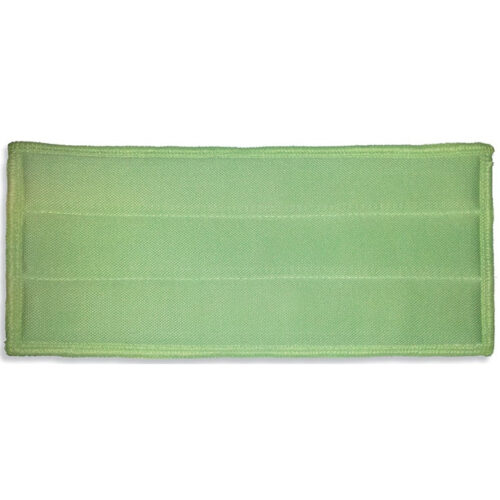
Pulex Cleano Glass Microfibre Pad Green 25cm
£5.00 exc. VAT -
Sale!
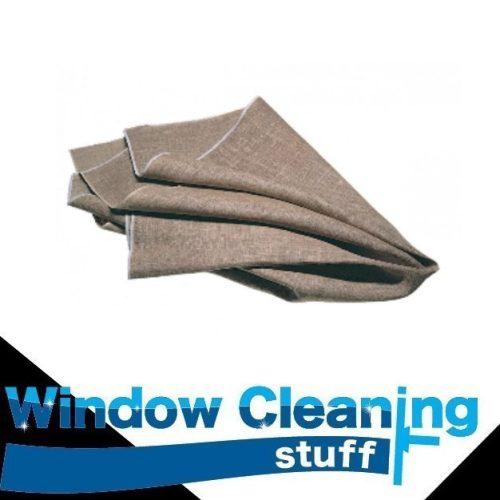
SCRIM Grade 1 Pre-Washed
Original price was: £16.00.£11.20Current price is: £11.20. exc. VAT -
Terry Towel White Cloth
£1.50 exc. VAT -
Sale!
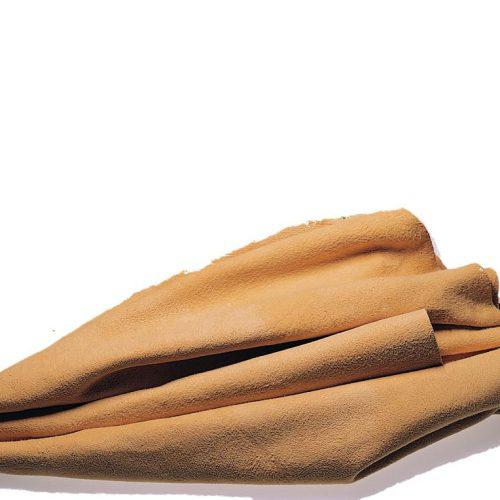
Chamois Leather cloth Extra Large 6.5ft²
Original price was: £26.00.£15.60Current price is: £15.60. exc. VAT




Bruce Joyce –
Using scrim for a long time and could see no reason to change. Tried one of these, converted. Great for frames.